
What Is Mexican Loteria?
Mexican Loteria is a traditional game of chance played with illustrated cards and player boards called tablas. It is often compared with bingo, but instead of numbered balls, Loteria uses colorful images of people, animals, plants, foods, instruments, celestial figures, and everyday objects.
A caller draws the cards one at a time and announces each image. Depending on the family, region, or style of play, the caller may simply name the card or introduce it with a humorous saying, rhyme, riddle, or familiar expression.
For generations, Loteria has brought families and communities together around the table. The recognizable images and the voices used to call them have made the game an enduring part of Mexican and Mexican American cultural life.

Where Did Loteria Come From?
Games related to Loteria circulated in Europe before reaching Latin America during the colonial period. Museum sources trace their development through Italy, France, and Spain before the game became established in Mexico during the eighteenth and nineteenth centuries.
Loteria did not begin in Mexico in its earliest form, but Mexico transformed it into the illustrated cultural tradition recognized today. Over time, different regions and publishers developed decks featuring locally meaningful people, animals, plants, occupations, foods, and household objects.
The Familiar Illustrated Deck
Among the different versions, the deck associated with Don Clemente became the most widely recognized. Its simple illustrations, numbered cards, and familiar sky-blue backgrounds helped establish the visual style many people now associate with Mexican Loteria.
The familiar version contains 54 illustrated cards, including El Gallo, La Dama, El Catrin, La Sirena, El Corazon, La Luna, El Nopal, La Estrella, La Calavera, El Sol, and La Rana.
How Is Loteria Played?
Each player receives a tabla containing a selection of card images. Many familiar tablas use a four-by-four arrangement containing 16 different pictures.
The caller shuffles the deck and draws one card at a time. Players look for the matching image on their tablas and cover it with a small marker. Beans, coins, stones, bottle caps, and other small objects have traditionally been used as markers.
A player wins by completing the pattern selected for that game and calling out, “Loteria!”
The winning pattern can vary. Players may agree to complete:
- A horizontal, vertical, or diagonal line
- The four corners
- A smaller square pattern
- A complete tabla
- Another pattern selected before the game begins
Rules and calling styles can differ between families and communities. That flexibility is part of the tradition.

The Caller, Sayings, and Family Voices
The caller gives Loteria much of its personality.
Instead of announcing every card by name, an experienced caller may use a saying, joke, rhyme, or clue that invites players to identify the image. These expressions can be humorous, clever, affectionate, or improvised for the people gathered around the table.
Because calling styles are often learned informally, families may remember not only the cards but also the voice of the person who taught them to play.
Family Memories and Shared Names
For many people, Loteria recalls birthday parties, Christmas and New Year gatherings, summer evenings, food and drinks shared with relatives, and time spent with older family members and friends. The game can preserve memories of the people who once sat around the same table.
Some cards can feel especially personal because names such as Luna, Rosa, Garza, Gallo, Corona, and Estrella also appear as family names. Recognizing a surname among the cards can create an immediate connection between the deck and a person’s own family history.
What Do the Loteria Cards Represent?
The traditional images include a broad cross-section of recognizable figures and objects:
- People and social characters
- Animals and birds
- Trees, plants, flowers, and fruit
- Musical instruments
- Household and kitchen objects
- The sun, moon, and stars
- Images associated with travel, work, nature, celebration, and daily life
Together, the cards form a visual record of familiar objects and cultural references from the periods and communities in which different decks were created.
Not every Loteria deck is identical. Regional decks, independently created versions, educational editions, and contemporary interpretations may introduce different images or replace older ones.
Do Loteria Cards Have Official Meanings?
Loteria cards do not have one universally accepted system of official symbolic meanings.
Some images naturally invite interpretation. El Valiente may evoke courage, La Escalera may suggest progress, El Arbol may bring to mind family roots, and El Corazon may be associated with love. However, these are interpretations rather than definitions established by the rules of the game.
A card’s meaning can come from:
- The object or person pictured
- Traditional or improvised caller verses
- Regional customs
- Family memories
- A shared surname
- Artistic interpretation
- The way cards are grouped together
This is why the same image can mean something different to different people.
Casa Villa Arte’s curated tile collections bring cards together around visual and emotional themes such as love, remembrance, nature, music, family, courage, and celebration. These collections are creative interpretations and are not presented as official historical meanings assigned to the cards.
Historical Images and Modern Interpretations
Some card names and illustrations reflect the visual language and social attitudes of the period in which a particular deck was created. Viewers today may understand or respond to those images differently.
At the same time, artists and communities continue to create new Loteria decks based on local history, contemporary life, education, humor, and personal identity. This continued reinvention shows that Loteria is not a frozen collection of images. It is a living artistic and social tradition.
Traditional and modern versions can exist side by side, each reflecting the people and time that produced them.

Loteria Beyond the Game Table
Loteria imagery has expanded far beyond printed playing cards. Its recognizable figures can now be found in paintings, prints, murals, books, educational projects, clothing, ceramics, home decor, and contemporary art.
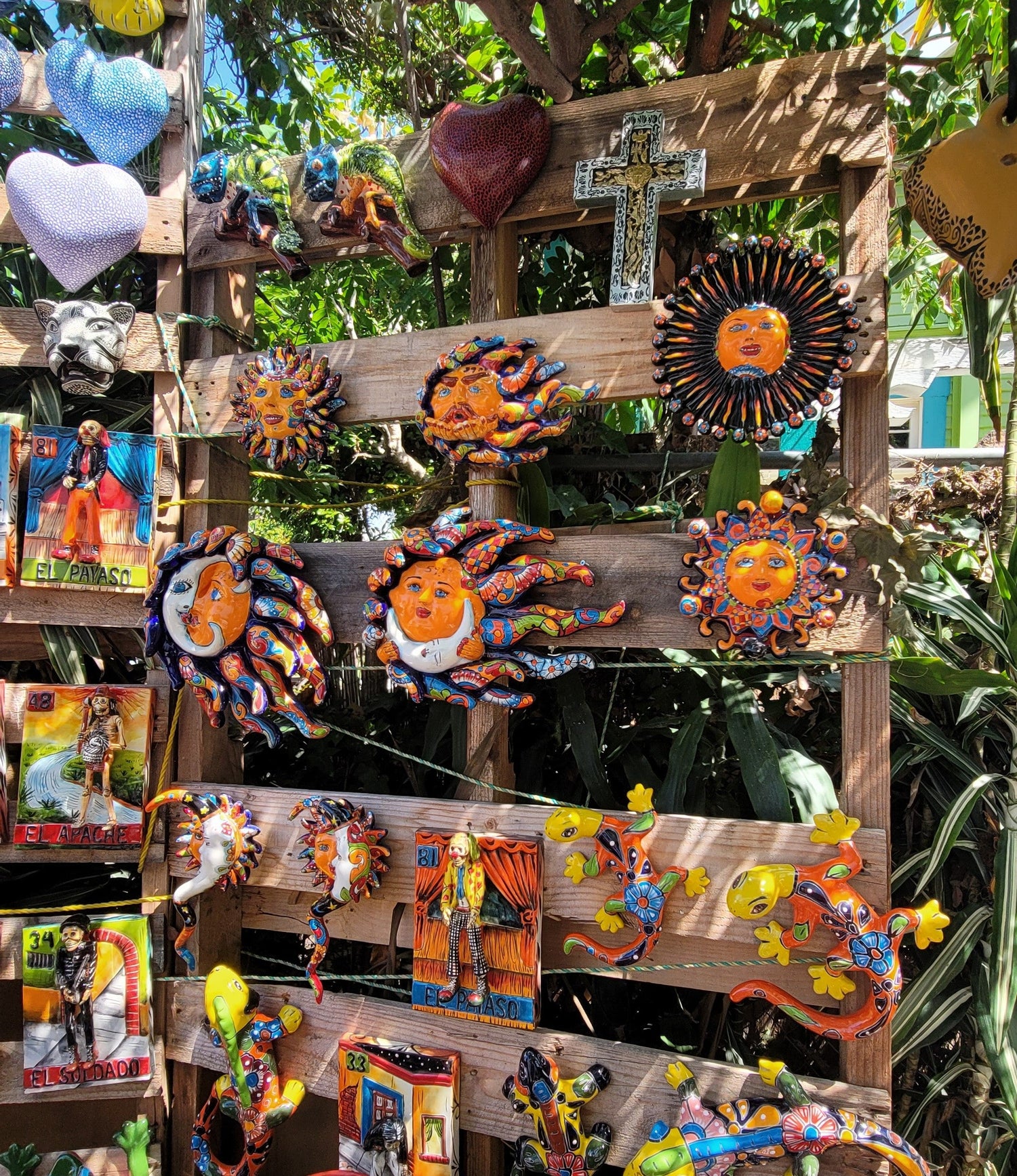
The images are also used to create custom tabletops and permanent game tables. Ceramic Loteria tiles can be arranged into a playable tabla and affixed to a table surface. Players can then use a separate calling deck and game markers to play directly on the tiled table.
Other collectors display individual cards or coordinated groups on walls, shelves, patios, kitchens, and gallery-style arrangements.
Loteria at Casa Villa Arte
Casa Villa Arte offers decorative ceramic tiles and cork-backed coasters featuring images from the familiar Mexican Loteria deck.
The ceramic tiles can be displayed individually, arranged into curated collections, incorporated into art projects, or affixed to custom tabletops and Loteria game tables. When arranged as a playable table, separate calling cards and game markers are required.
Whether someone recognizes a favorite card, a family name, or a memory from gatherings years ago, Loteria continues to connect images with people, stories, and shared experiences.
Sources and Further Reading
Information for this page was reviewed using educational materials and collection records from the following institutions:
- Smithsonian American Art Museum — Carmen Lomas Garza’s Loteria-Tabla Llena
- Museum of Latin American Art — Loteria
- Library of Congress — El Juego de Loteria